

Industry
Clinical reporting where the system drafts and the specialist keeps sign-off.
- The problem
- Named below
- Evidence
- Case study
- Model
- Fixed scope
- Ownership
- Yours

Specialists spend the day writing reports instead of reading studies.
Words we already know
- Reporting queue
- Sign-off
- Clinical governance
- Attribution
Clinical reporting is a bottleneck with a fixed supply of the only people allowed to clear it. A neurologist writing up an EEG spends most of that time on structure and phrasing rather than on the reading itself, and the queue grows faster than the department can clear it. Hiring is slow, and the backlog is not.
We never automate the judgement. We move the automation one step earlier, to the blank page: the system produces a draft structured the way the department already writes them, the clinician reviews, corrects and signs, and the signed document is what leaves the system. Every draft is attributable and every edit is retained, which is what makes it acceptable to a clinical governance committee rather than only to a procurement one.
The systems this sector actually needs.
Disciplines involved
- Draft generation per study, in the department's format
- Clinician review and sign-off workflow
- Full attribution and edit history on every draft
- Backlog clearance across an existing queue
- Integration with the systems the department already runs
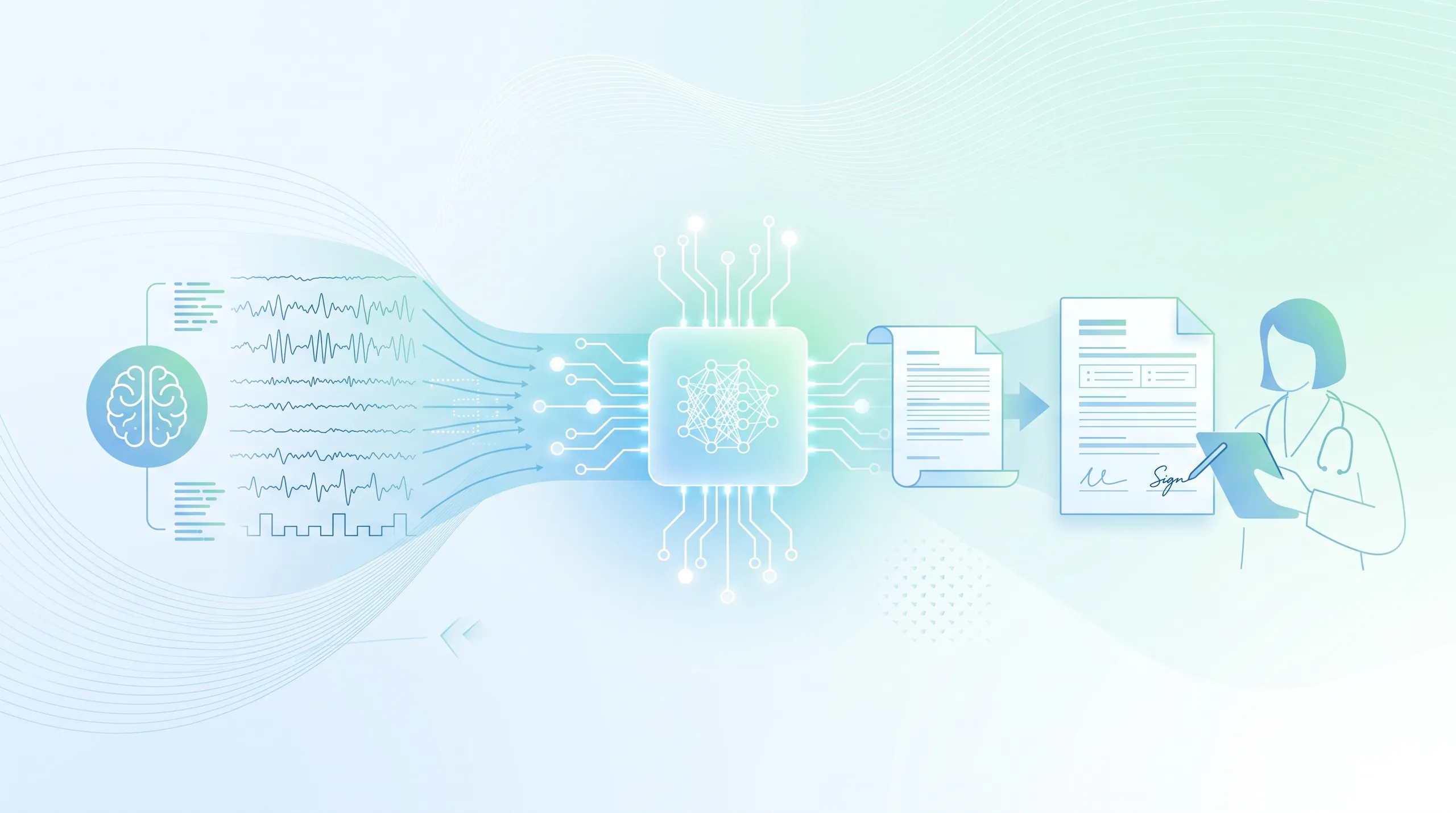
A hospital network clears a three-week EEG backlog
An AI reporting pipeline that drafts EEG reports for neurologists to review and sign, cutting drafting time by 70%.
Running healthcare?
Describe it in plain language. We will respond with a proposed architecture, a first milestone and the key risks.
We respond within one business day. If we are not the right fit, we will tell you.